What to see in Aix-en-Provence in a day, a weekend or a week? The answer fits neatly into a few words: fountains, grand town houses, lively markets, the legacy of Cézanne and the Provençal art of living. A university city and a city of art in equal measure, Aix-en-Provence is best explored on foot, neighbourhood by neighbourhood, without a car in the centre. Here is our pick of the sites that are genuinely worth the detour.
The Cours Mirabeau, the beating heart of the city
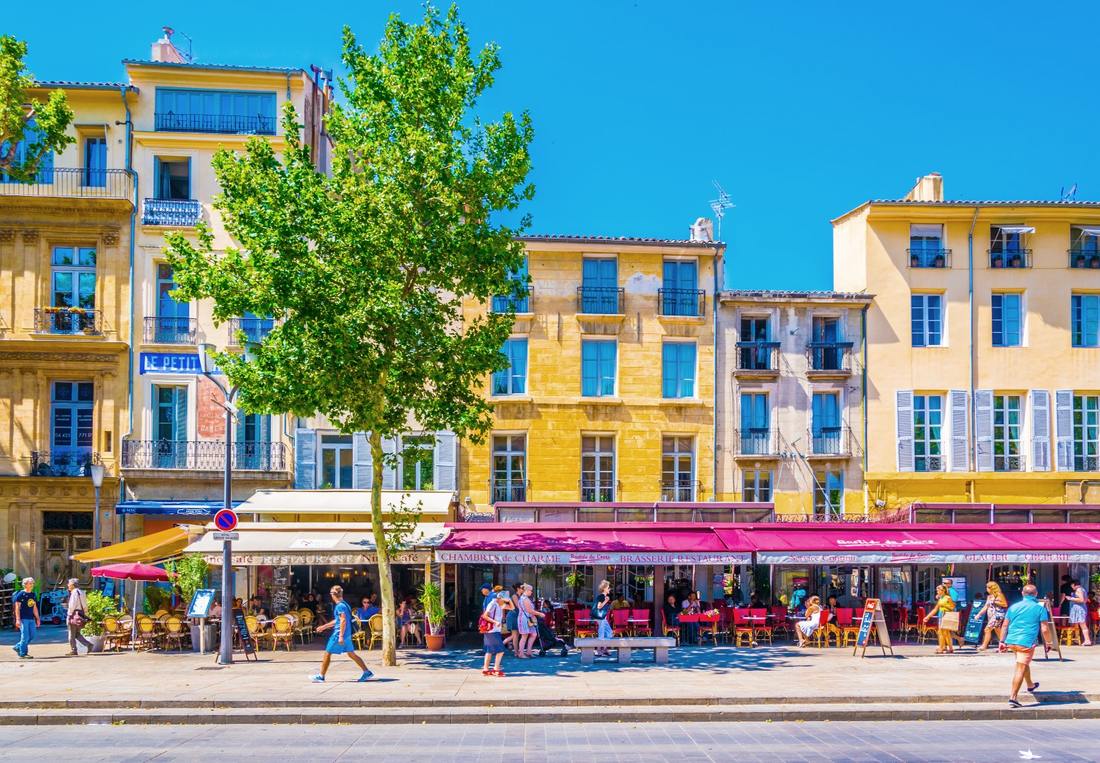
Every visit starts here. The Cours Mirabeau is to Aix what the Canebière is to Marseille: a legendary boulevard lined with centuries-old plane trees that filter the summer light, mossy fountains and 17th-century private mansions. On the shaded café terraces, Aix life unfolds at its own unhurried pace. The Fontaine de la Rotonde at its western end marks the natural starting point of any stroll.
On one side of the cours, the grand brasseries and boutiques; on the other, the lanes of the old quarter. Take your time wandering: the Baroque architecture, the wrought-iron shop signs and the uneven cobblestones are all part of the spectacle.
The Mazarin quarter and its grand mansions
To the south of the Cours Mirabeau, the Mazarin quarter was laid out with a ruler in the 17th century by Archbishop Michel Mazarin. It is one of the most cohesive urban ensembles in Provence: broad perpendicular streets, austere and noble façades, a few discreet art galleries. The Place des Quatre-Dauphins, with its elegant fountain, is its central jewel.
Close by, the Musée Granet deserves a proper visit. It brings together collections of French, Italian and Flemish paintings, and devotes an entire room to Cézanne — a painter born in Aix whose imprint on the city remains ever-present.
In the footsteps of Cézanne
Paul Cézanne (1839–1906) is inseparable from Aix-en-Provence. Two places are essential for anyone who wants to understand his world.
- Cézanne's Studio (Chemin des Lauves): the studio he had built in 1902 and where he worked until his death. The furniture, the props and the still-life objects that populated his canvases are still there. The visit is understated and deeply moving.
- Montagne Sainte-Victoire: the massif that obsessed the painter, visible from several points in the city and magnificent at sunrise or sunset. You can walk around it or hike across it; a private driver can drop you at the trailhead and come back to collect you.
A signposted Cézanne trail through the city-centre streets connects the key places from his childhood and life: his birthplace apartment, the Collège Bourbon, a few cafés where he used to meet Émile Zola.
The markets and Provençal life
The markets of Aix-en-Provence are among the finest in Provence. Three not-to-be-missed appointments (times are approximate and vary by season):
- Place Richelme market: fruit, vegetables, cheese and flowers every morning Tuesday to Sunday. A genuinely authentic local producers' market.
- Place des Prêcheurs market: larger, on Tuesday, Thursday and Saturday mornings. Provençal specialities, santons figurines, household linen.
- Flower and herb market: Place de l'Hôtel-de-Ville, in the morning. Lavender, thyme and Aix soap take pride of place.
Don't leave without tasting the calissons d'Aix — a local confection made from almonds and candied melon whose origins date back to the 15th century. Several shops in the centre sell them in gift boxes.
Old Aix and its lively squares
The historic centre is best explored on foot, with no fixed itinerary. A few stops to weave into your wander:
- Cathédrale Saint-Sauveur: a composite building blending Romanesque, Gothic and Baroque styles, with a remarkable early-Christian baptistery and Nicolas Froment's 15th-century triptych, the Burning Bush.
- The Town Hall and Clock Tower: Place de l'Hôtel-de-Ville, the lively heart of the old town.
- The fountains: Aix has around fifty of them. You encounter one at every corner — warm thermal fountains, mossy fountains, Baroque fountains. It is why the city is sometimes called "the city of a hundred fountains".
Day trips around Aix
Aix-en-Provence's location is ideal for exploring the great sites of Provence.
- The Luberon: the hilltop villages of Gordes, Bonnieux, Roussillon and the ochre cliffs of Rustrel are reachable in under an hour from Aix.
- Marseille: about thirty kilometres away (30 to 40 minutes), for a day at the Calanques or on the Old Port. Our Marseille page has everything you need.
- Arles and the Camargue: around an hour away, for the Roman arenas and the flamingos.
- Montagne Sainte-Victoire: early in the morning, before the heat sets in, for a hike with an exceptional panorama.
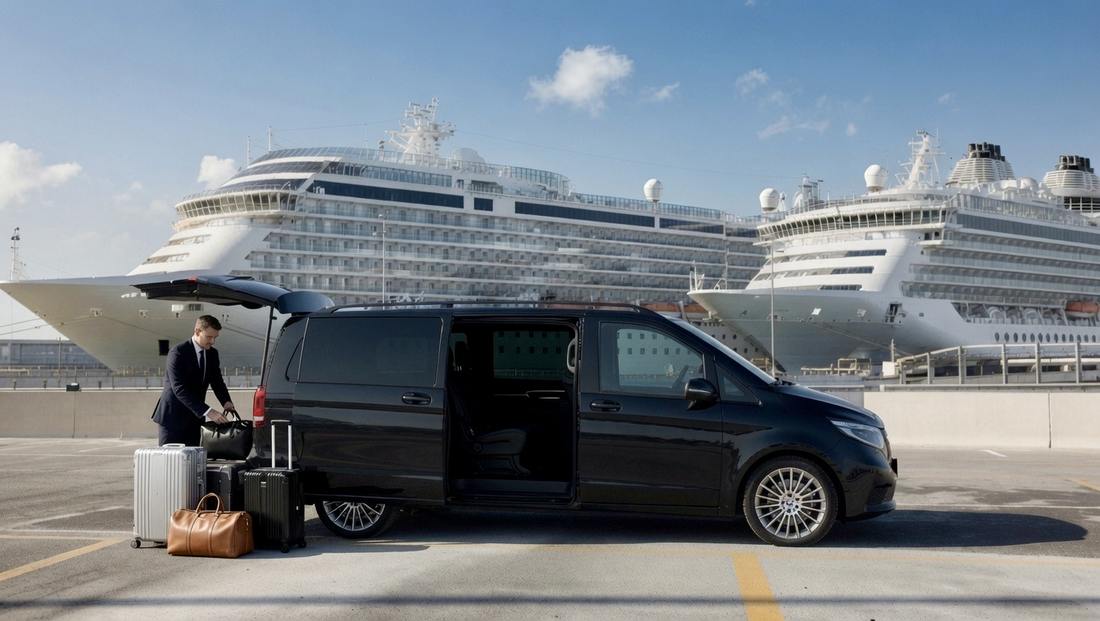
For these excursions, a NeoShuttle private driver is the most relaxed solution: a fully inclusive fixed price agreed at booking, help with luggage, a comfortable private vehicle available around the clock. No parking to wrestle with in villages of narrow lanes, no tiring drive back after a day on the trails.
Aix-en-Provence deserves far more than a quick stop between two trains. Whether you arrive at Aix TGV station or from Marseille-Provence Airport, NeoShuttle provides your door-to-door transfer with a name-sign welcome and flight or train tracking. Book your transfer now and enjoy Aix without a logistical worry in the world.